


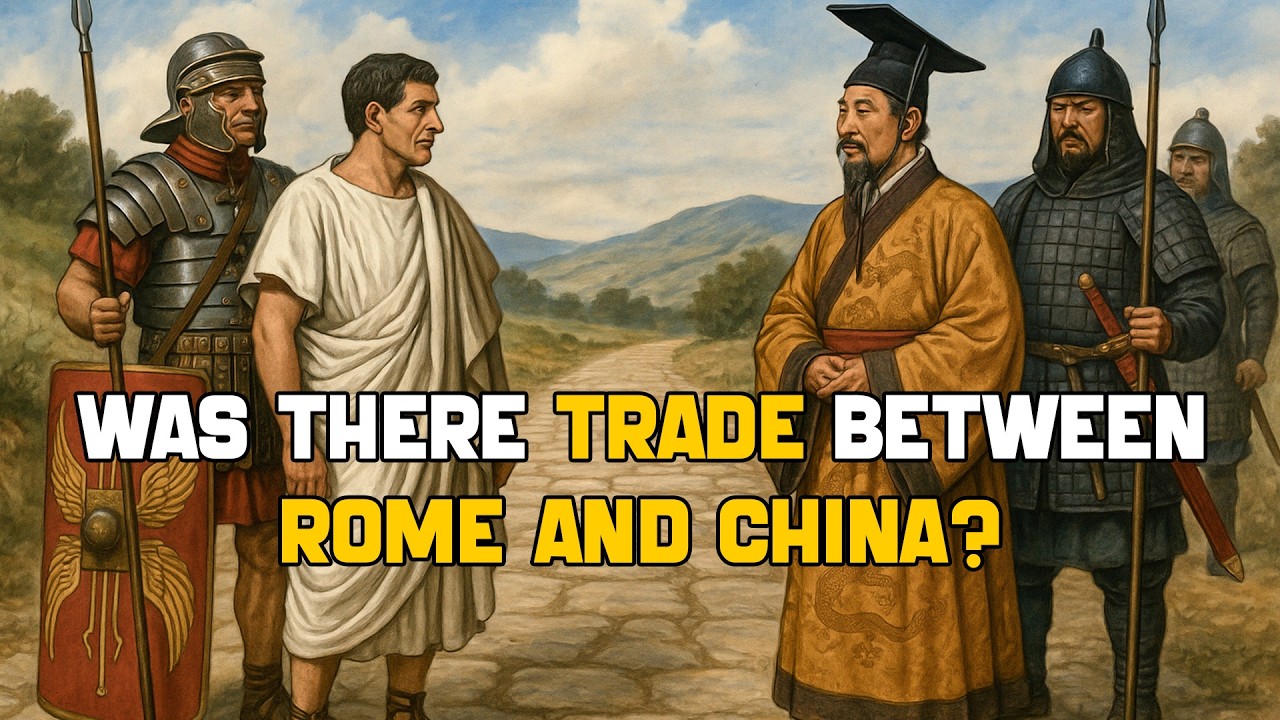
Between the 1st century BC and the 4th century AD, Rome maintained intense exchanges with the East, especially India and China. Via the Red Sea route (Berenike), seafarers used the monsoons described in the Periplus to reach ports such as Muziris and Arikamedu—where Roman coins and ceramics have been found. Pepper, ginger, silks and fine textiles arrived; Chinese silk, via the Silk Road, drew criticism (Pliny). Han sources mention “Da Qin” and a mission linked to Marcus Aurelius (disputed). The economic flow brought mutual cultural influences—an ancient “globalization.”
If you like our content, check out our original comics:
Medusa: The Cursed Priestess –
Eros and Psyche: The Quest for Love –
Japanese Mythology in Comics: The Essential –
#SeeUinHistory #History
source
7 Comments
Have those who muddled our histories purposely omitted from them the records which would have connected the black Malays, red Medes and Romans with the pools of Dorset and Brownsea? Is not the alliance between Romans and Malays sufficiently established by the name of every hill and hollow of the county, by every relic found in it, by the ominous neighborhood of the New Forest, by every tradition of the rivers Stour, Piddle, Frosne or Frome, also those from Lyme Regis to Lymington, and from Axminster to Mere, Hindon and Salisbury?
– page 71, Origin of the Western Nations and Languages by Charles Lassalle, published 1883 –
Rome called it trade, everyone else called it robbery
Indeed!!!😊👍.
All cultures I feel like played a huge role in the growth of life. It’s just that nowadays we forgot how to be respectful.
The Biggest mistake the Romans have ever done:
They never conquered Parthia.
❤🤍💙 all your video's mate👍.
🇺🇸 usa