


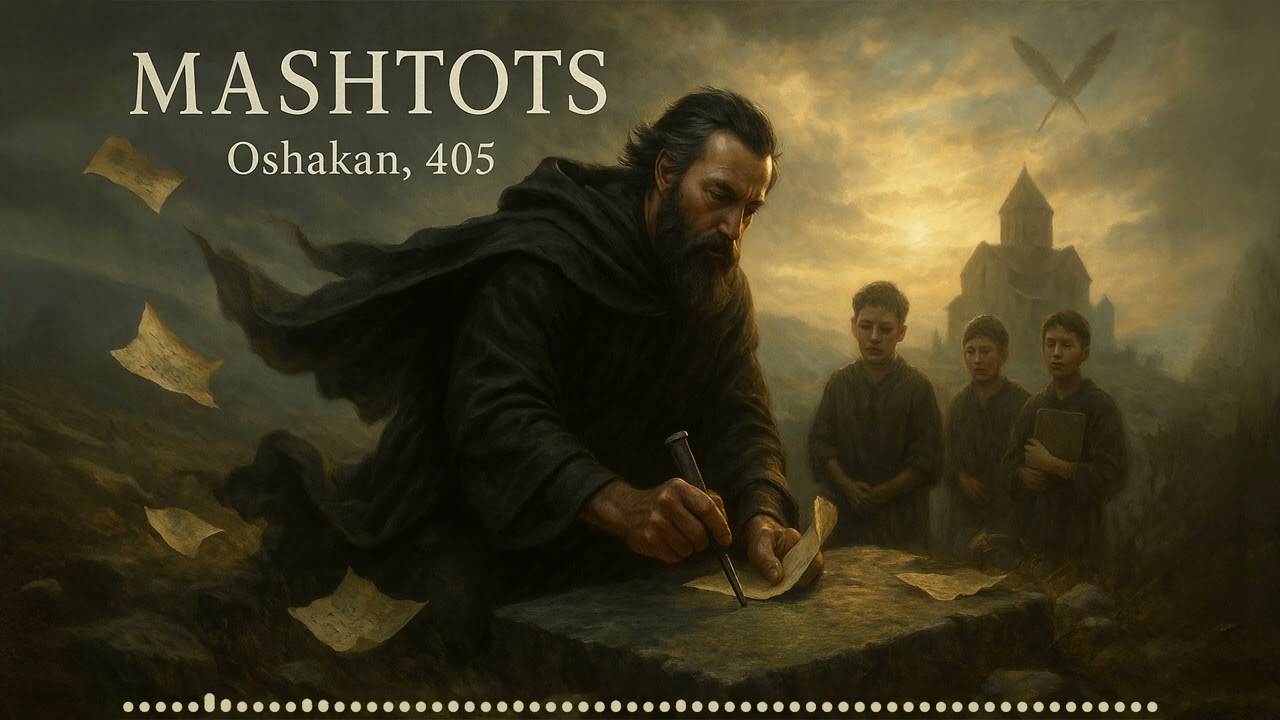
In 405 CE, the Armenian monk and scholar Mesrop Mashtots introduced a new writing system for the Armenian language.
Until then, Armenians had no standardized native script. Religious texts were written in Greek, Syriac, or Persian, and oral tradition dominated cultural transmission. This lack of a native alphabet limited religious education and the development of national identity.
Mashtots, born in 362 and trained in both theology and classical languages, recognized the need for a uniquely Armenian script. With support from King Vramshapuh and Catholicos Sahak Partev, he developed an alphabet tailored to the phonetics of the Armenian language. The resulting system initially contained 36 letters, with two more added in the Middle Ages.
The first major use of the new script was the translation of the Bible into Armenian. This translation was completed by Mashtots and his students and remains a cornerstone of Armenian literature. The alphabet also enabled the growth of a distinct Armenian Christian identity during a time of pressure from surrounding empires.
Mashtots and his disciples travelled throughout Armenia to teach the script and establish schools. This contributed to the spread of literacy and the preservation of Armenian culture during periods of foreign domination. Mashtots died in 440 and was buried in the village of Oshakan, which remains a pilgrimage site today.
His invention of the Armenian alphabet is considered one of the most important cultural milestones in Armenian history. It allowed for the development of a national literature, religious independence, and long-term cultural resilience.
#mashtots #armenianalphabet #oshakan #armenianhistory #earlychristianity #armenia405 #caucasus #languagehistory #bibletranslation #culturalidentity #nationalalphabet #ai
—
**Glossary**
– **Mesrop Mashtots**: Armenian monk and scholar (362-440), inventor of the Armenian alphabet.
– **Oshakan**: Village in present-day Armenia, burial site of Mashtots.
– **Armenian alphabet**: Writing system created in 405 CE to reflect Armenian phonetics.
– **Vramshapuh**: Armenian king who supported Mashtots’ work.
– **Sahak Partev**: Head of the Armenian Apostolic Church during Mashtots’ lifetime.
– **Syriac**: Aramaic-derived script used in some early Armenian Christian texts.
– **Bible translation**: The Armenian Bible was one of the first texts written in the new alphabet.
– **Caucasus**: Geographical region where Armenia is located.
– **Alphabet reform**: The act of creating or modifying a script to match a spoken language.
– **Christianization of Armenia**: Armenia adopted Christianity as state religion in 301 CE.
—
**Glossary**
– **Mesrop Mashtots**: Armenian monk and scholar (362–440), inventor of the Armenian alphabet.
– **Oshakan**: Village in present-day Armenia, burial site of Mashtots.
– **Armenian alphabet**: Writing system created in 405 CE to reflect Armenian phonetics.
– **Vramshapuh**: Armenian king who supported Mashtots’ work.
– **Sahak Partev**: Head of the Armenian Apostolic Church during Mashtots’ lifetime.
– **Syriac**: Aramaic-derived script used in some early Armenian Christian texts.
– **Bible translation**: The Armenian Bible was one of the first texts written in the new alphabet.
– **Caucasus**: Geographical region where Armenia is located.
– **Alphabet reform**: The act of creating or modifying a script to match a spoken language.
– **Christianization of Armenia**: Armenia adopted Christianity as state religion in 301 CE.
—
source